

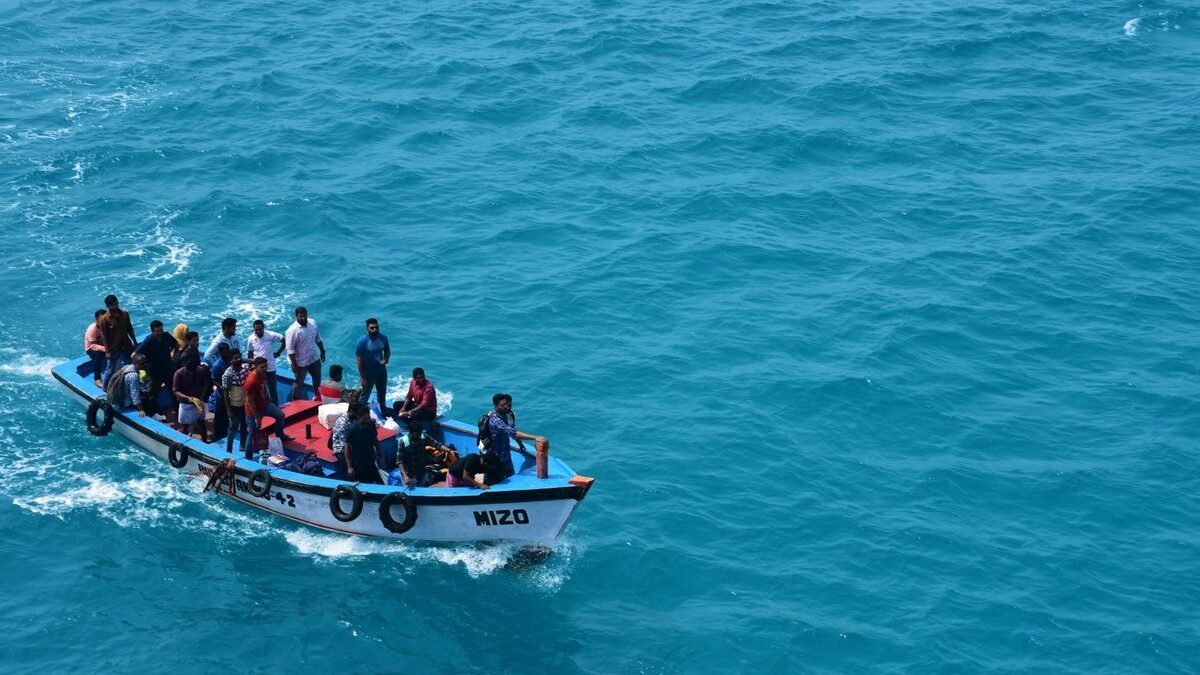
Late June marks the beginning of the period that border agencies, NGOs and EU institutions track most closely: the summer crossing season, when calmer Mediterranean seas and longer days coincide with the highest volumes of irregular migration attempts toward European shores. This summer arrives with a new legal framework — the EU Pact on Migration and Asylum, which entered application in 2026 after years of negotiation — but with the underlying displacement pressures that drive migration largely unchanged. Here is what the data and the policy context suggest about what Europe should expect in the months ahead.
The routes and their current pressures
The Central Mediterranean route — from Libya and Tunisia toward Italy, primarily Malta and Lampedusa — remains the deadliest and most active crossing corridor. Frontex data through the first five months of 2026 shows crossings roughly in line with the same period of 2025, with the mix of nationalities reflecting ongoing instability in sub-Saharan Africa, continued displacement from Syria, and secondary movements of people who have transited multiple countries before attempting the sea crossing. Tunisia’s cooperation with European border management funding has produced some reduction in departures from Tunisian shores, but Libya remains largely ungoverned in its coastal areas and continues to be the departure point for a significant proportion of central route crossings.
The Western Balkans route — overland through Turkey, Serbia, and toward Hungary or Croatia — has fluctuated significantly in recent years as bilateral agreements and political dynamics shift. The route saw elevated crossings in 2024 following a period of relative reduction; the 2026 situation is being monitored closely given increased displacement from Afghanistan and sustained Syrian secondary movements through Turkey. Greece’s Aegean border remains active, with the Evros land border continuing to see attempts despite enhanced surveillance.
What the new Migration Pact changes — and what it doesn’t
The EU Pact on Migration and Asylum entered into application in 2026 after a multi-year legislative process that was among the most contested in recent EU history. Its core innovations are the mandatory solidarity mechanism — which requires all member states to either accept relocated asylum seekers or contribute financially to support frontline states — and the accelerated border procedure, which processes asylum applications at the point of entry within 12 weeks for people from countries with low recognition rates.
The solidarity mechanism is the Pact’s most significant political achievement: it ends the opt-out model under which landlocked and northern member states could decline any responsibility for migration management at external borders. In practice, most member states have chosen financial contributions over physical relocation, which means the burden on frontline states — Italy, Greece, Spain, Malta, Cyprus — remains high even with financial transfers. Whether the mechanism produces meaningful operational solidarity or primarily financial solidarity-at-a-distance is one of the key questions this summer will begin to answer.
Search and rescue: the persistent tension
The role of NGO search and rescue vessels in the Central Mediterranean remains one of the most politically charged aspects of Mediterranean migration management. Italian legislation restricting SAR vessel operations has been the subject of ongoing legal challenges. The humanitarian case — that people in distress at sea have a right to rescue under international maritime law regardless of the political circumstances of their crossing — is uncontested in law. The political dispute is about whether SAR operations create incentives for crossings that cost lives overall. The evidence on this question remains genuinely contested among researchers, and the debate will continue through another summer season in which lives will be lost in Mediterranean waters regardless of the legal and political frameworks that surround them.