

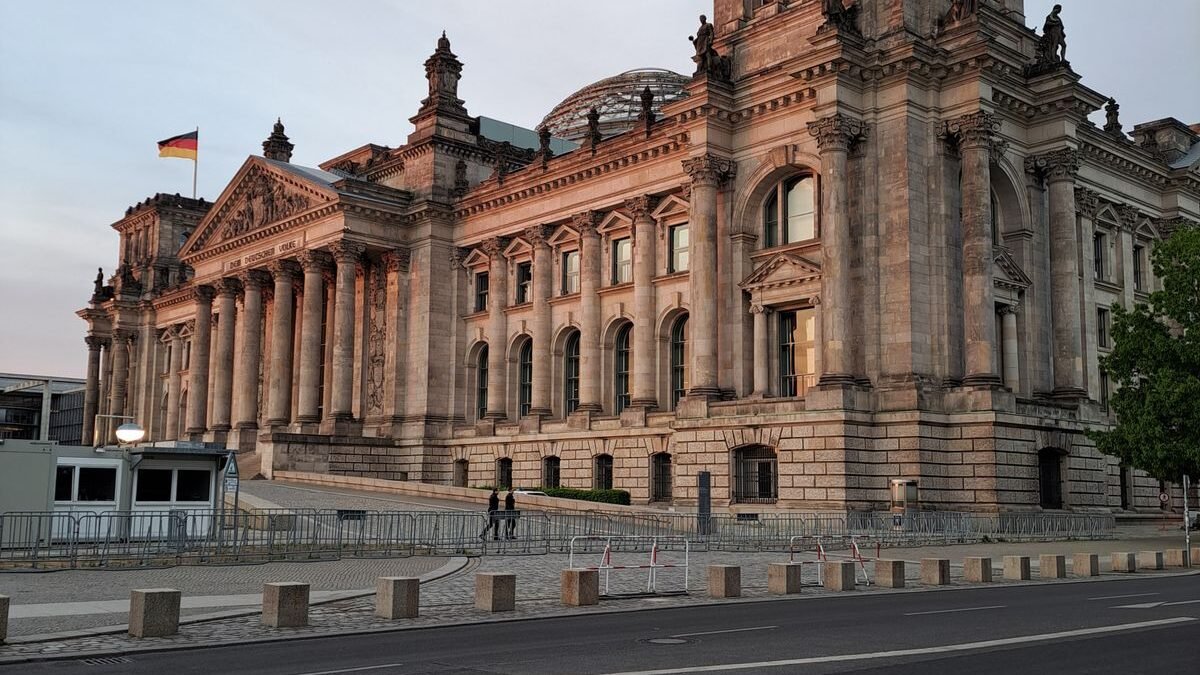
Germany’s governing coalition is fracturing under the weight of conflicting priorities — and the implications extend well beyond Berlin. As the bloc’s largest economy struggles to maintain political coherence, European leaders are watching closely: a weakened Germany means a weakened EU at a moment when the continent can least afford internal distraction.
What is driving the coalition strain?
The tensions stem from a familiar fault line in German politics: fiscal conservatism versus activist government spending. Coalition partners spanning the centre-right CDU/CSU, the SPD and a smaller liberal bloc have been unable to reconcile competing demands around the 2027 federal budget, defence contributions to NATO, and social welfare commitments. Behind closed doors in Berlin, negotiations have grown increasingly acrimonious, with junior partners threatening to block key legislation.
Germany’s constitution still contains the strict Schuldenbremse — the debt brake — which limits federal borrowing to 0.35% of GDP. With defence spending targets requiring significant increases and social spending under pressure from an ageing population, the coalition is fighting over a genuinely shrinking fiscal space.
Why Europe is paying attention
Germany’s political weight in the EU is substantial. Berlin shapes eurozone fiscal policy, influences the European Central Bank through its Bundesbank representatives, and plays a central role in EU foreign policy on Ukraine, China and trade. When the German government is internally divided, its positions in Brussels become harder to sustain — and harder for partners to rely on.
“A coalition that cannot agree on the budget cannot lead on European defence integration,” said one senior Brussels diplomat this week. “We need a Germany that speaks with one voice, especially now.”
The European Commission has already flagged Germany’s sluggish economic performance heading into the second half of 2026. Berlin has fallen behind France and several Central European economies in industrial output growth — a humbling reversal for a country accustomed to setting the eurozone’s pace.
Three scenarios worth watching
Analysts at the German Institute for Economic Research (DIW) in Berlin outline three plausible paths. In the first, the coalition holds through compromise — accepting a partial relaxation of the debt brake via constitutional reform, unlocking funds for defence and infrastructure but facing fierce Bundestag resistance. In the second, one partner exits, forcing a minority government or snap elections, triggering months of political paralysis. In the third — increasingly discussed in Berlin political circles — an early general election reshapes the domestic landscape entirely, just as critical EU negotiations heat up heading into 2027.
The EU dimension
Each scenario carries distinct consequences for the bloc. A prolonged Berlin deadlock would delay German ratification of key EU legislation, including updated single market rules and the competitiveness package championed by the Commission. It would also complicate negotiations for the next multiannual financial framework, where Germany is both the largest net contributor and a reluctant reformer.
France has positioned itself to fill any German leadership vacuum — though Paris carries its own political fragility. The Franco-German axis has long defined the EU’s direction of travel. When it stalls, the whole European project slows with it. Coalition talks continue in Berlin this week. Whether they succeed or not, the rest of Europe is drawing its own conclusions.