

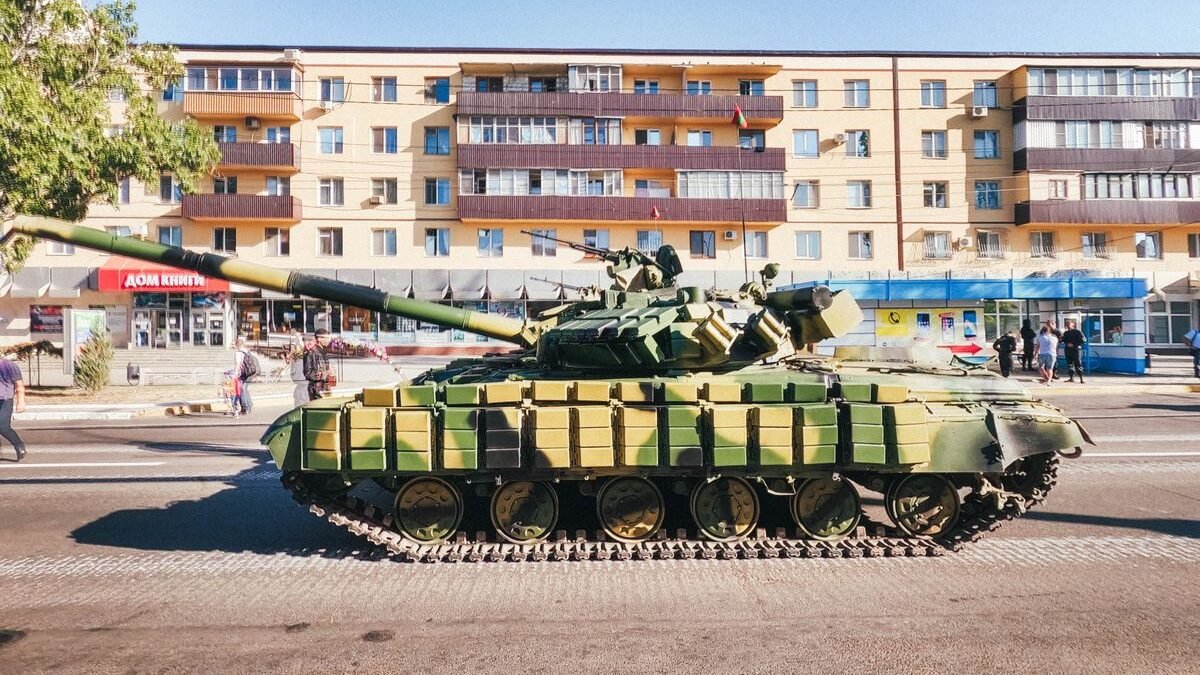
The numbers are stark. Since Russia’s full-scale invasion of Ukraine in February 2022, European NATO members have collectively increased annual defence spending by more than €130 billion. As a share of GDP, the average European NATO member’s defence budget has risen from 1.6% to 2.2% — the fastest sustained increase since the Cold War. The rearmament of Europe is real, measurable, and still accelerating. But the critical question — whether it is happening fast enough, in the right places, and with sufficient industrial capacity behind it — is contested by every serious defence analyst on the continent.
Who is spending and what they are buying
Dr. Claudia Major, head of the international security research division at the German Institute for International and Security Affairs (SWP) in Berlin, has spent the past two years tracking European defence investment patterns. Her assessment is measured but direct.
“What we are seeing is a real increase in budgets — that is not in question,” she says. “What is in question is whether the spending is being translated into usable military capability at the speed the security environment demands. Ordering equipment and actually fielding it are very different things.”
Poland is the outlier on the upside: at 4% of GDP, Warsaw’s defence budget is the highest in NATO relative to economic size, and it is being spent on a massive conventional force modernisation — tanks, artillery, air defence systems and expanding the size of the Polish army from 150,000 to a planned 300,000 troops. The contrast with Baltic defence postures, where smaller countries are investing proportionally in specialised capabilities and NATO integration, reflects different strategic priorities rather than different levels of commitment.
Germany’s trajectory is more complicated. The Zeitenwende — the historic shift in German defence policy announced by Chancellor Olaf Scholz in February 2022 — included a €100 billion special fund for Bundeswehr modernisation. Much of that money has been committed but not yet spent, as procurement bureaucracy, industrial capacity constraints and coalition disagreements have slowed delivery. As coalition tensions in Berlin have demonstrated, sustaining political consensus for large-scale defence spending across a parliamentary term is harder in practice than announcing it at a podium.
The industrial capacity problem
Defence spending is only as useful as the industrial base capable of converting it into equipment. Europe’s defence industries spent three decades in a post-Cold War contraction — consolidating, cutting capacity, optimising for low-volume high-value exports rather than high-volume wartime production. Scaling back up is slow and expensive.
Artillery shell production — the most acute shortage exposed by Ukraine — has increased significantly in Sweden, Germany, France and the Czech Republic, but remains well below wartime consumption rates. MBDA’s missile production in France, Italy and the UK has expanded, but lead times for advanced systems still run to years. The European Defence Fund, administering €7.9 billion over 2021–2027 for collaborative R&D, is beginning to yield results in areas like drone swarms and autonomous systems — but these are 2030+ capabilities, not 2026 ones.
What changes and what does not
Major identifies a genuine strategic shift in European attitudes to defence that she believes is durable. “The political consensus that defence spending was a cost to be minimised has broken. That is a significant change,” she notes. “What has not fully changed is the integration between national defence programmes — Europeans are still largely rearming nationally rather than collectively, which limits the efficiency of what is being spent.” The EU’s push for joint procurement and interoperability is moving in the right direction, she argues, but the pace is still set by the slowest member state in any given programme.