

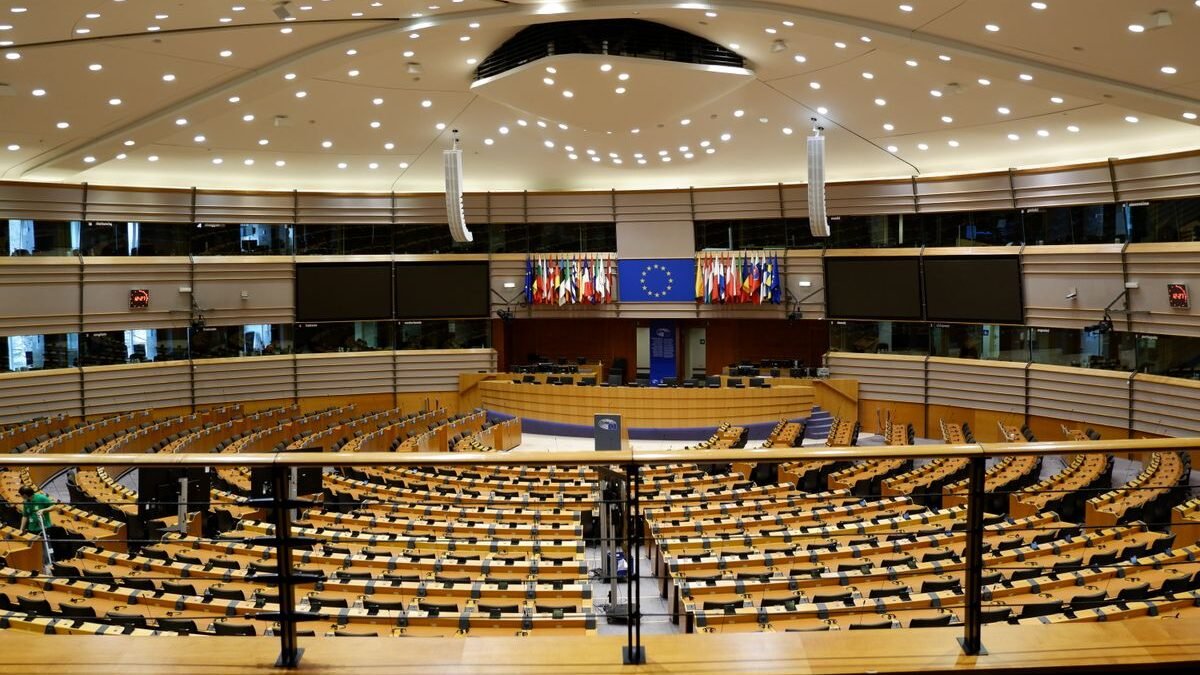
The European Union’s institutional architecture confuses seasoned political observers, let alone ordinary citizens. Three major bodies share legislative and executive power in a system that resembles no national government on earth. Understanding how the European Parliament, the European Commission and the Council of the EU actually work — and how they interact — is essential to understanding why EU decisions take so long, why they sometimes look nothing like what was originally proposed, and why they nonetheless tend to stick once made.
- The European Parliament has 720 MEPs elected directly by EU citizens every five years.
- The European Commission has 27 Commissioners — one per member state — and proposes virtually all EU legislation.
- The Council of the EU represents member state governments; it shares legislative power with the Parliament on most issues.
- The ordinary legislative procedure (co-decision) requires agreement between Parliament and Council — a process that typically takes 18–24 months.
- The European Council (heads of state meetings, chaired by its own President) sets strategic direction but does not legislate.
The Commission: Europe’s civil service and its engine
The European Commission is the only body that can formally propose EU legislation — a monopoly on legislative initiative that gives it enormous power over the EU’s agenda. Its 27 Commissioners, one nominated by each member state and collectively confirmed by the Parliament, are supposed to act in the EU’s general interest rather than their national interest. In practice, this works better than sceptics predict and less perfectly than idealists hope.
The Commission also enforces EU law — it can launch infringement proceedings against member states and refer them to the European Court of Justice. This enforcement function, as illustrated by the ongoing Hungary rule-of-law dispute, is the EU’s sharpest tool for ensuring that membership obligations are honoured.
The Parliament: directly elected, genuinely powerful
Elected every five years by EU citizens, the Parliament co-decides legislation with the Council, approves the EU budget, and has the power to censure the Commission — forcing its collective resignation. It has used that last power only once (in 1999), but the credible threat of it shapes the Commission’s relationship with MEPs constantly.
Parliament is frequently dismissed as a talking shop. This misreads it seriously. MEPs have amended EU legislation on everything from data privacy to financial regulation in ways that materially changed the final text. The GDPR, now one of the most influential pieces of tech regulation in the world, was significantly shaped by Parliament’s amendments during the legislative process.
The Council: where member states negotiate
The Council of the EU — distinct from both the European Council (heads of state) and the Council of Europe (a separate organisation entirely) — brings together national ministers from each member state to agree the Council’s position on proposed legislation. Which ministers meet depends on the subject: finance ministers meet in ECOFIN, foreign ministers in the Foreign Affairs Council, and so on.
Voting in the Council requires a qualified majority on most issues — 55% of member states representing 65% of the EU population. Unanimity is still required for sensitive areas including taxation, foreign policy, treaty changes and EU enlargement. This explains why progress on tax harmonisation and common foreign policy has been so slow: any single member state can block it.
How a law is actually made
The Commission proposes. The Parliament and Council each develop their own positions, often through months of committee work and negotiation. When both have a position, they enter “trilogue” — informal three-way negotiations between Parliament, Council and Commission that produce a compromise text. That text is then formally adopted by both institutions. The entire process, from proposal to final adoption, averages about two years for complex legislation. Understanding this helps explain why the EU appears slow-moving: it is, by design, a system that requires broad consensus before acting.