

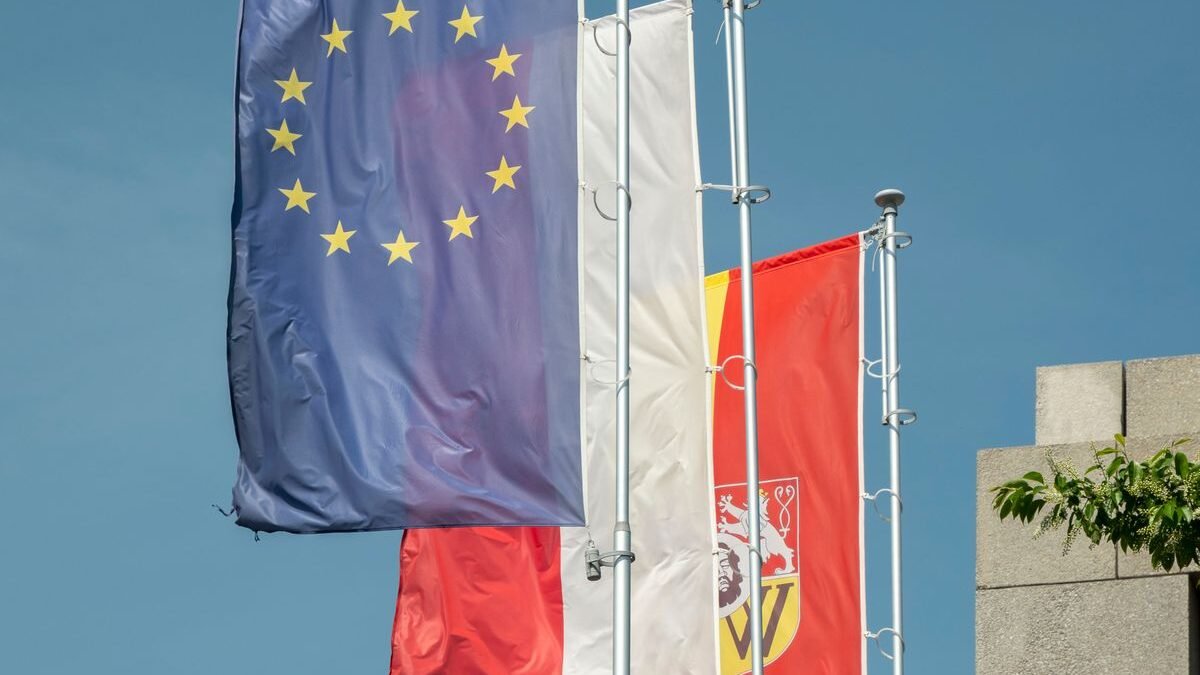
EU leaders gathered in Brussels on 26–27 June for the final European Council summit before the summer recess — a meeting that combined the immediate urgency of Ukraine support and defence spending with the slower-moving structural questions of enlargement, migration and economic competitiveness. Summits rarely produce the breakthroughs that pre-summit briefings promise, and this one was no exception. But the accumulated decisions matter, and the political signals sent to partners and adversaries alike are real.
Defence: pushing past 2% toward 3%
The headline outcome on defence was agreement in principle on a pathway toward 3% of GDP in defence spending for member states — a target that moves the European conversation beyond the NATO 2% baseline that most EU members have only recently reached, or are still approaching. The language in the summit conclusions is deliberately non-binding: “member states are invited to present national plans” toward the higher target by the end of 2026, with a review in early 2027. This is political signalling more than legal commitment, but political signalling at a European Council level carries weight that ministerial communiqués do not.
The defence industrial strategy — specifically the joint procurement targets and the use of the European Defence Fund to support common capability development — was endorsed with stronger language than at previous summits. The Commission’s proposal for an EU defence bond, which would allow collective borrowing for joint defence investment, was discussed but not formally decided; Germany and the Netherlands remain sceptical, and the issue will return in autumn.
Ukraine: continued support confirmed
The European Council reaffirmed its support for Ukraine “for as long as necessary” — the formula that has anchored EU communications since 2022. The summit conclusions explicitly endorsed the continuation of military support, the next tranche of macro-financial assistance under the Ukraine Facility, and the accession process. No new dramatic measures were announced, but the political value of a unanimous reaffirmation — including from the Hungarian government, which has repeatedly complicated consensus — should not be understated.
Ukraine’s accession process was noted as progressing, with the Commission’s latest report acknowledging advances on rule-of-law and judicial reform chapters. Leaders agreed to continue the negotiating framework and encouraged Kyiv to maintain its reform pace, with the next progress assessment due in autumn 2026.
Migration: the summer pressure season
With summer crossing seasons approaching, migration featured prominently in both the formal agenda and the margins conversations. The new Pact on Migration and Asylum — now in its first full year of implementation — was reviewed, with several member states expressing concern about the pace of Dublin system reform and the burden-sharing mechanism. Italy, Greece and Malta reiterated calls for stronger external border support. The Commission was asked to accelerate implementation of returns agreements with key countries of origin and to report on progress at the October summit.
Competitiveness: the Draghi follow-through
The competitiveness agenda — anchored in the Draghi report’s diagnosis — continues its gradual translation into policy. Leaders endorsed the Commission’s work on the EU Competitiveness Compass and called for accelerated progress on the Capital Markets Union, the Energy Union, and the Digital Single Market. The substance is not new, but the political weight of repeated European Council endorsement matters for Commission priority-setting and for signalling to member state governments that these are areas where Brussels expects action.
The summit’s overall message was one of a European Union that is under sustained pressure on multiple fronts and is responding — incrementally, imperfectly, but collectively. The summer recess follows a first half of 2026 in which European institutions have been more active on defence, enlargement and economic reform than at any comparable period in the last decade. The autumn agenda will determine whether that momentum is sustained.