

For the Western Balkans, European Union membership has been a promised destination for over two decades. Serbia, Montenegro, Albania, North Macedonia, Bosnia-Herzegovina and Kosovo have all been told, at various points and with varying degrees of conviction, that their future lies inside the EU. Yet as of July 2026, not one of them has crossed the threshold. The gap between promise and reality has become one of the EU’s most persistent credibility problems — and its most consequential geopolitical vulnerabilities.
What the process actually looks like
Dr. Florian Bieber, professor of Southeast European Studies at the University of Graz and one of Europe’s foremost experts on Balkan EU integration, describes the accession process as “the world’s most ambitious external governance project — and one that has never quite delivered on its own terms.”
The formal framework requires candidate countries to align their laws, institutions and governance standards with the EU acquis — the body of EU law comprising tens of thousands of regulations and directives. Progress is assessed annually by the European Commission, which grades each country on 35 negotiating chapters covering everything from competition policy to judicial reform. In practice, the process moves slowly, is highly politicised, and is frequently stalled by both candidate-country resistance to reform and EU member state reluctance to commit to actual enlargement.
Montenegro: the furthest along, and still not there
Montenegro has been in accession negotiations since 2012 — fourteen years. It has opened all 35 negotiating chapters. Yet it has closed only three provisionally, and its rule-of-law record — the area the EU now treats as the core conditionality — remains a source of concern. “Montenegro illustrates the fundamental problem,” says Bieber. “The EU framework is very good at generating reform processes. It is much less good at generating actual outcomes.”
Serbia: the political variable
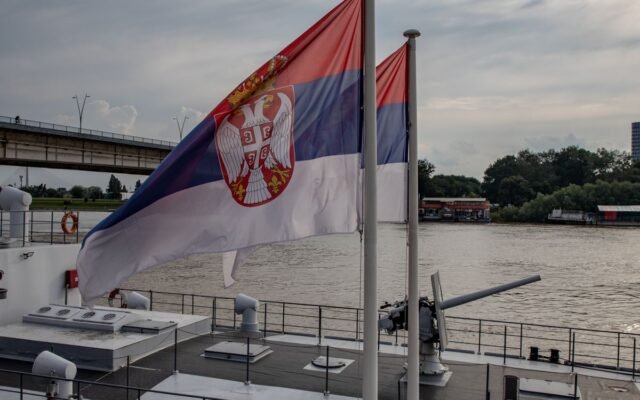
Serbia’s accession talks, opened in 2014, have been effectively frozen since the country’s failure to align with EU sanctions on Russia following the 2022 invasion. Belgrade’s relationship with Moscow — historical, economic and, for the governing Serbian Progressive Party, politically convenient — has become the central obstacle. The EU has made clear that full sanctions alignment is a prerequisite for meaningful progress. Belgrade has so far declined to cross that line.
The Kosovo question adds a further layer of complexity. Five EU member states — Spain, Greece, Cyprus, Romania and Slovakia — do not recognise Kosovo’s independence, complicating any framework that would bring both Serbia and Kosovo closer to the EU simultaneously.
Why this matters beyond the Balkans
The consequences of the EU’s slow enlargement progress are visible in the region. Russian and Chinese investment and influence have grown steadily in the spaces that EU membership credibility vacated. China’s Belt and Road infrastructure projects crisscross the region. Russian energy dependency remains significant in Serbia and Bosnia. Turkish influence is expanding in Bosnia’s Muslim-majority Federation entity.
As the war in Ukraine has demonstrated, geopolitical vacuums in Europe’s neighbourhood do not remain empty. The EU’s credibility as an anchor for democratic governance in the Western Balkans is being tested — and the test results, so far, are mixed.
The Commission’s revised enlargement methodology, adopted in 2020 and updated in 2025, attempts to make the process more dynamic and politically meaningful. Whether it succeeds depends ultimately on whether EU member states — and their electorates — are genuinely willing to welcome six new members into the bloc. That political question remains conspicuously unanswered.