
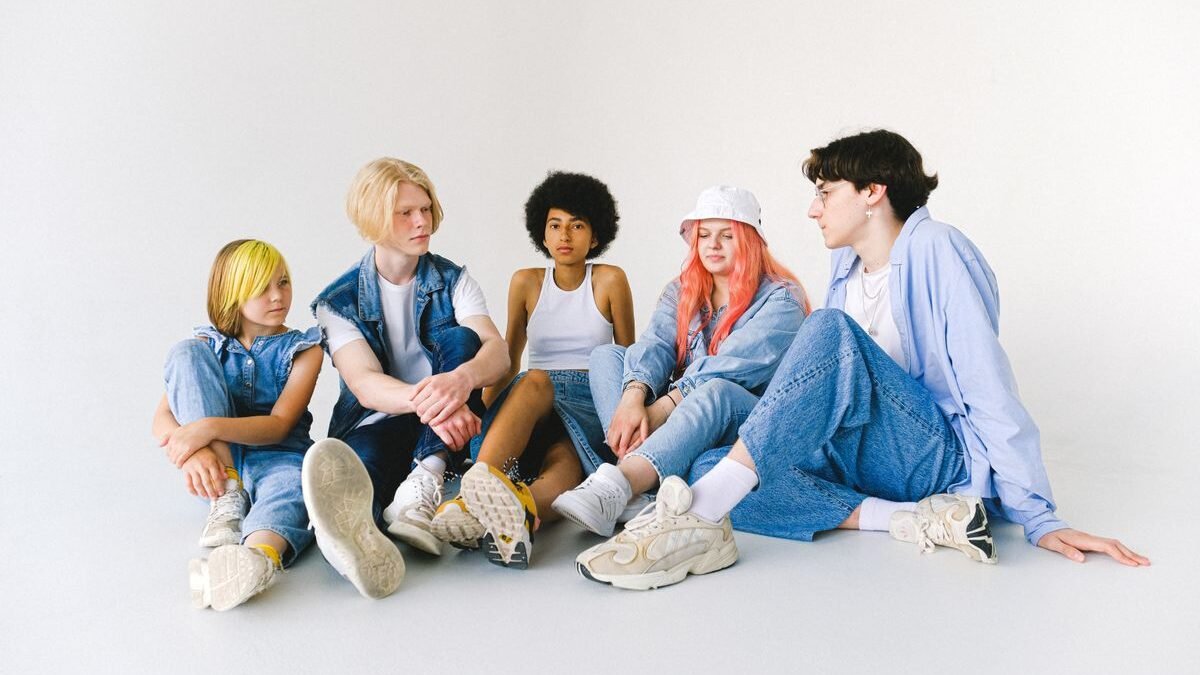
The debates that fill the pages of this publication — about defence spending, climate policy, migration, economic competitiveness, enlargement — are ultimately debates about what kind of future Europe will be for the people who will live in it longest. We asked young Europeans across six countries about the continent they want to inhabit in twenty years. Their answers were less predictable than the generational stereotypes suggest — more anxious on some fronts, more pragmatic on others, and more politically varied than the “youth vote” label implies.
On security: a generation that grew up with war
The young Europeans we spoke to in Warsaw, Tallinn, Lisbon, Milan, Vienna and Amsterdam share a security consciousness that their counterparts of ten years ago did not. “I was seventeen when the full invasion started,” says Marta, a 21-year-old economics student in Warsaw. “It sounds strange to say, but war has just been… background. Real. Not a history lesson.” This is a generation that came of age with Russia’s invasion of Ukraine as a present geopolitical reality, not a historical event. Their support for Ukraine and their views on European defence spending are correspondingly more hawkish than older cohorts in most EU countries.
In the Baltic states, this security consciousness is even more acute. “We’ve been told since childhood that Russia is dangerous,” says Kristaps, 24, a software developer in Riga. “But now everyone else in Europe finally believes it too.” The alignment between Baltic security perceptions — previously dismissed as excessive sensitivity by some Western European commentators — and a broader European consensus has given young people from these countries a sense that their warnings were vindicated. As explored in our Baltic security analysis, that vindication is not comfortable — it comes with real risk.
On climate: belief without trust
The young Europeans we interviewed overwhelmingly accept climate science and want ambitious climate action. What many of them have lost is confidence that European governments and institutions will deliver it. “I believe the EU when it says 2050 net zero,” says Chiara, 26, a graduate student in Milan. “I don’t believe they’ll actually do it. There are too many elections between now and then.” This combination — genuine belief in the necessity of climate action combined with institutional scepticism — is broadly consistent with survey data showing that younger EU citizens support climate ambition more than any other age group but have lower institutional trust than the population as a whole.
On housing and economic security: the defining concern
If one theme dominated our conversations above all others, it was housing and economic security. The cost of renting in the cities where most young Europeans want to live — and where most of the jobs that match their qualifications are — is the most immediate, most personal manifestation of the broader economic pressures documented in our cost-of-living comparison, the housing analysis, and the mental health crisis piece. “My parents bought their apartment on one teacher’s salary,” says Sofía, 28, a teacher in Madrid. “I make more than my mother did and I can’t afford the same neighbourhood she bought in.” The gap between parental experience and offspring reality is, for many young Europeans, the single most concretely felt failure of the current economic model.
On Europe itself: pragmatic attachment
What emerged most clearly from our conversations was a generational relationship with European identity that is simultaneously more taken-for-granted and more conditional than the European project’s founders might have hoped. Young Europeans are European in their cultural references, their travel habits, their professional networks. They are also more critical consumers of European institutions than previous generations were. The EU is, for most of them, not a project to be believed in — it is an institutional landscape to be held to account. That may be the most genuinely European thing about them.