

The European far right is no longer a fringe. Across the continent, parties that were once confined to the political margins have entered governments, reshaped mainstream agendas and, in several countries, become the dominant political force. Understanding how this happened — and what it means for European democracy and EU governance — requires looking at the trajectory, not just the current snapshot.
The 1990s: emergence from the margins
Far-right parties began their modern political ascent in the early 1990s, exploiting the anxieties generated by economic dislocation, German reunification, Yugoslav wars and the early phase of mass immigration to Western Europe. Jörg Haider’s FPÖ in Austria, Jean-Marie Le Pen’s Front National in France, and Umberto Bossi’s Lega Nord in Italy established the electoral template: anti-immigration, Eurosceptic, anti-establishment, and culturally conservative. All were treated as pariahs by mainstream parties. All generated cordon sanitaire agreements designed to keep them from power.
2000–2015: Normalisation begins
The cordon sanitaire began cracking. The FPÖ entered Austrian government in 2000, triggering EU diplomatic sanctions — the only time the EU has imposed such measures on a member state over a democratic election result. The sanctions were quietly lifted fourteen months later, having achieved nothing except to demonstrate that the EU lacked tools to manage democratic backsliding through legitimate elections. Across Scandinavia, parties modelled on the Danish People’s Party moved from electoral breakthrough to parliamentary relevance and, eventually, to informal coalition arrangements with centre-right governments.
2015–2022: The migration crisis as accelerant
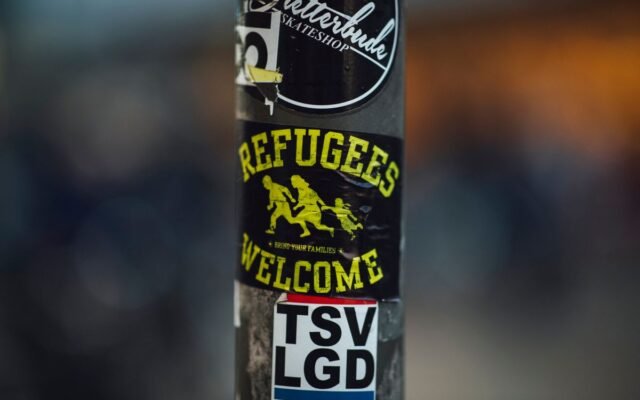
The 2015 refugee crisis was the single most significant accelerant of far-right electoral support in a generation. Over one million people crossed into the EU in 2015 alone, and mainstream governments — particularly Angela Merkel’s Germany — were seen by significant portions of electorates as having lost control of a fundamental state function: managing the border. Parties that had been warning about mass immigration for decades now had their central argument validated by events visible on every television screen.
The political consequences were immediate and lasting. Alternative für Deutschland entered the Bundestag in 2017 for the first time. The Sweden Democrats became the country’s second-largest party. In Italy, the League and Brothers of Italy — the latter a direct descendant of a post-fascist party — became the dominant political force, eventually forming a government under Giorgia Meloni in 2022. As examined in our coverage of European Parliament election trends, the 2024 elections confirmed this shift at EU level.
2022–2026: In government and reshaping the debate
Today, far-right or nationalist parties are in government or providing external parliamentary support to governments in Italy, the Netherlands, Finland, Slovakia and Hungary. In France, the Rassemblement National under Marine Le Pen remains the largest single party in the National Assembly. In Germany, AfD polls consistently in second place nationally.
Their presence in power has changed mainstream politics even where they are not governing directly. Immigration, border control and national identity have moved from the margins to the centre of almost every European political agenda. Mainstream centre-right parties across the EU have adopted positions on migration that would have been considered far-right a decade ago — a dynamic that validates far-right parties’ framing while complicating their distinctiveness.
What the evidence says about causes
Academic research consistently identifies three overlapping drivers: economic insecurity and perceived status loss among voters without higher education; cultural anxiety about immigration and national identity; and generalised distrust of established political institutions and media. These factors interact and reinforce each other. They are not easily addressed by any single policy intervention, which is why the mainstream parties that have tried to “respond” to the far right through policy adoption have generally found it an ineffective containment strategy.