

On 1 January 1993, Czechoslovakia divided peacefully into two countries — the Czech Republic and Slovakia — in what became known as the Velvet Divorce. Thirty-three years later, the two nations share a border, a language family, a common history extending back centuries, and membership of both the EU and NATO. But the political and economic trajectories they have followed since independence have diverged in ways that provide one of Central Europe’s most instructive comparative studies.
The first decade: different speeds, different choices
The early 1990s were difficult for both countries, but Slovakia’s difficulty was more acute. Under Prime Minister Vladimír Mečiar, Slovakia pursued economic privatisation in ways that concentrated assets among political insiders, maintained closer ties with Russia than its Central European neighbours, and initially fell behind in EU and NATO accession processes. The Czech Republic, under Václav Klaus’s economic liberalism, moved faster toward market reform and Western integration — though not without its own privatisation scandals and a banking crisis in the late 1990s.
Slovakia’s turnaround came with the formation of a broad coalition government in 1998 that replaced Mečiar and reoriented the country toward EU and NATO membership. The subsequent reform period was remarkably rapid and effective: Slovakia joined both NATO and the EU in 2004, implemented a flat tax and labour market reforms that attracted significant foreign investment, and subsequently joined the eurozone in 2009 — becoming the first Visegrád country to adopt the euro.
The economic divergence
Today, the Czech Republic has a higher per capita GDP (at purchasing power parity) than Slovakia, but the gap has narrowed significantly. Slovakia’s economic growth since eurozone accession has been faster than the Czech average, driven primarily by automotive manufacturing — Volkswagen in Bratislava, Kia in Žilina, Stellantis in Trnava — that has made Slovakia one of the world’s largest per-capita car producers. The Czech Republic’s economy is more diversified, with a stronger services sector and a technology industry anchored by Brno and Prague.
Czech wages and living costs are higher, and the country has not experienced the same brain drain pressures as Slovakia, where emigration of skilled workers — particularly to the UK and Germany — has been a persistent economic and social challenge. As discussed in our youth unemployment analysis, the mismatch between educational output and domestic labour market needs affects both countries, though in different ways.
The political divergence: a sharper contrast
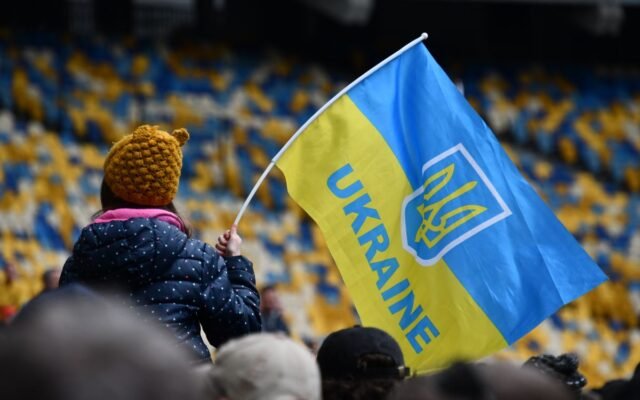
Politically, the divergence has been more striking. The Czech Republic has maintained a broadly pro-EU, pro-NATO political mainstream, with occasional Eurosceptic populist episodes that have not fundamentally altered the country’s alignment. Slovakia’s politics have been more turbulent: Robert Fico’s SMER party has oscillated between pro-European social democracy and a post-2023 return to power with a markedly more pro-Russian, anti-Ukraine-support stance that has put Bratislava at odds with most EU and NATO partners. The Fico government’s reluctance to provide military support to Ukraine and its warm rhetoric toward Moscow represents the most significant current divergence from EU foreign policy consensus among Visegrád members — a remarkable contrast with the Czech Republic’s strong Ukraine support and the Polish defence pivot documented earlier this year.
The Velvet Divorce produced two countries from one. Three decades on, those two countries are making distinctly different choices about their place in Europe and the world.