
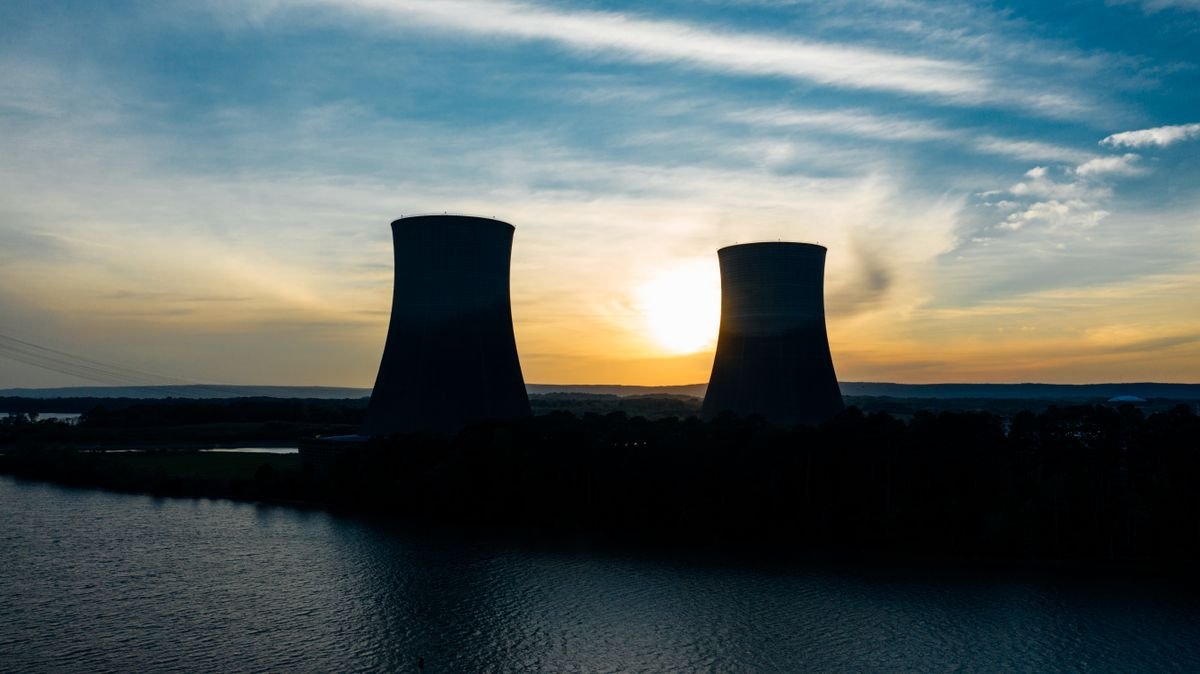
Nuclear power was written off in much of Europe after Fukushima in 2011 — a political verdict that translated into plant closures, moratoriums and the kind of regulatory atrophy that happens when an industry loses political support. Five years on from Russia’s invasion of Ukraine, and with European energy security now a political priority that displaces pre-2022 assumptions, the verdict has been reconsidered. Several European countries are building new nuclear plants, extending the lives of existing ones, and investing in small modular reactor technology. Others are not. The divergence is significant and reflects genuine differences in energy mix, political culture, and national risk assessment.
- France currently generates approximately 70% of its electricity from nuclear power — the highest share of any large country in the world.
- Finland’s Olkiluoto 3 reactor began commercial operation in April 2023 — the first new nuclear reactor completed in Western Europe in over 16 years.
- France has approved construction of six new EPR2 reactors, with the first expected online by 2035–2037.
- Poland has signed agreements for its first nuclear power plants — to be built using American and South Korean technology — with the first unit targeted for 2033.
- Germany completed the shutdown of its last three nuclear plants in April 2023, despite the energy crisis, following a political decision that remained unchanged under the subsequent government.
The pre-Fukushima era and the retreat
Nuclear power provided a significant share of European electricity through the 1970s, 1980s and 1990s, supported by energy security arguments (reduced oil dependency) and the economic case for large baseload generation. The Chernobyl disaster of 1986 began shifting public opinion, and Fukushima in 2011 accelerated a political retreat across much of Western Europe. Germany, Belgium and Switzerland committed to phase-outs. No new plants were ordered in most of Western Europe for over a decade. The industry entered a period of managed decline that atrophied design, construction and regulatory capabilities.
2013–2021: Struggling projects and policy paralysis
The few projects that continued — Hinkley Point C in the UK, Flamanville 3 in France, Olkiluoto 3 in Finland — became bywords for construction delays and cost overruns that seemed to confirm nuclear’s economic uncompetitiveness. Flamanville and Hinkley Point C in particular ran years late and billions over budget, providing ammunition for nuclear critics. The industry’s defenders argued that these were first-of-kind construction challenges for a generation that had lost practical expertise, and that the cost curve would improve with subsequent units — the same trajectory solar and wind followed in their early deployment phases.
2022–2026: The energy security reversal
The energy crisis triggered by Russia’s invasion of Ukraine changed the political calculus in France, Poland, the Czech Republic, the Netherlands, Romania and Sweden. Nuclear power’s key attribute — firm, low-carbon generation that operates regardless of wind or sun — became acutely valued when European governments discovered how exposed they were to gas price volatility. Belgium reversed its phase-out by extending two reactors’ lives. The Netherlands restarted planning for new nuclear capacity. France’s six new reactor programme was confirmed. Poland — which has never had a nuclear plant — signed technology agreements with Westinghouse and Korea Hydro & Nuclear Power for its first two plants.
Small modular reactors (SMRs) — factory-built, smaller-scale reactors that could be deployed more quickly and cheaply than conventional large plants — have attracted significant investment from EU member states and the private sector. The technology is real but unproven at commercial scale; the first European SMR deployments are expected in the early 2030s. As explored in our net zero assessment, nuclear will be part of Europe’s 2050 energy mix — the only question is how large a part, and whether the industry can rebuild the construction capability that the previous decade’s political retreat eroded.